Crafting candles is simpler when you view it as a minor design endeavor: select the wax, align the wick to the container, manage the temperature, and evaluate the burn prior to creating a larger batch.
The initial candle doesn’t require elaborate botanicals or an intricate scent combination. A straightforward jar candle composed of soy wax, a well-centered wick, and a single fragrance oil imparts most of the essential knowledge.
Crafting candles at home
To create candles at home, gently melt candle wax using a double boiler, fix a wick in a heat-resistant jar, mix in candle-safe fragrance oil at the appropriate temperature, then pour the wax gradually and allow it to cool without disturbing the container. Once the candle has set, trim the wick and test the burn before producing additional candles.
Common errors for beginners include selecting the incorrect wick size, overheating the fragrance, pouring too quickly, and decorating too near the flame. Keep the initial batch uncomplicated; once the burn is stable, you can experiment with color layers, labels, dried flowers on the jar’s exterior, and unique scent combinations.
- Select wax, a heat-resistant container, and a wick that corresponds to the jar’s diameter.
- Gently melt the wax, then incorporate fragrance oil once the wax has slightly cooled.
- Position the wick centrally, pour the wax consistently, and let the candle cool at room temperature.
- Trim the wick, cure the candle if necessary, and test the initial burn before gifting or selling.
Supplies for DIY candle crafting
Candle materials influence the burn more than the final appearance indicates. Wax affects texture and scent dispersion, the wick manages the flame, and the container ensures safety and aesthetic appeal. If any of these three aspects is incorrect, decoration will not rectify the candle.
| Supply | Top choice for beginners | Significance |
|---|---|---|
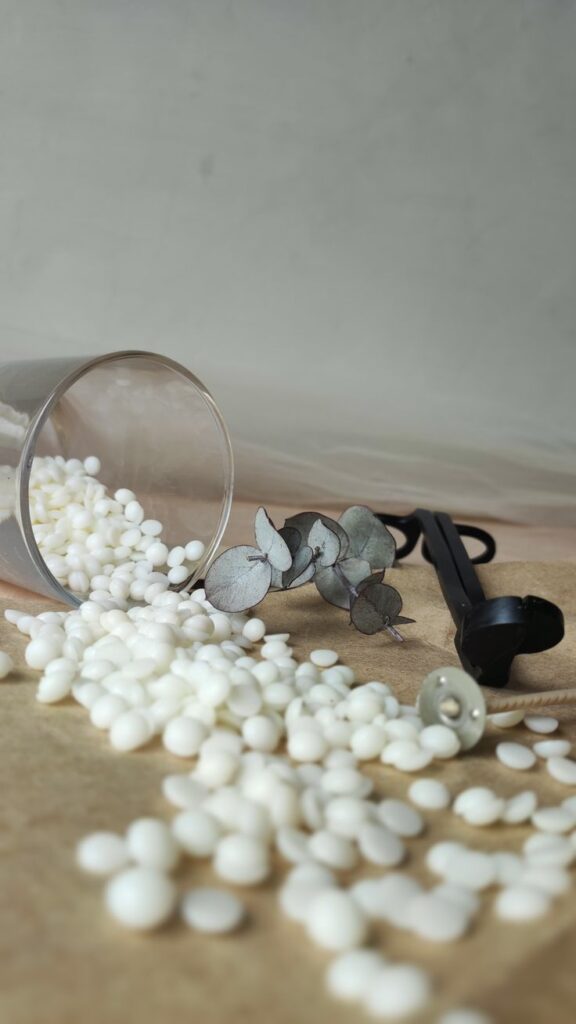
| Wax | Soy wax flakes | Simple to melt, ideal for jar candles, and forgiving for initial attempts |
| Wick | Pre-tabbed cotton wick | Simplifies setup and facilitates centering |
| Container | Heat-resistant glass jar or metal tin | Safeguards the wax and minimizes cracking risk |
| Fragrance | Candle-safe fragrance oil | Blends more effectively with wax compared to random perfumes or craft oils |
| Tools | Thermometer, pitcher, wick stickers | Assists in temperature regulation, pouring, and wick placement |
Wax types for homemade candles

Wax forms the core of the candle, so begin there. Soy wax is the most user-friendly option for container candles due to its even melting properties and soft, matte finish. Paraffin wax is more economical and typically produces stronger scent throw, though it is derived from petroleum. Beeswax emits a subtly honeyed aroma on its own and burns beautifully, although it has a higher cost and may be less accommodating with added fragrance.
Some artisans also use blends or specialty waxes to achieve specific outcomes. Melting points and textures can differ, so selecting the appropriate wax depends on the candle’s intended use and personal taste.
Selecting the appropriate candle wick
Wicks govern the flame, the melt pool, and the amount of soot produced by the candle. Choose a wick that corresponds to the wax and the internal diameter of the jar, rather than just the candle’s height. A wick that is too small causes tunneling; a wick that is too large burns intensely, produces smoke, and may overheat the container. Pre-tabbed cotton wicks are the simplest to begin with, while wooden wicks offer a gentle crackle but require additional testing.
Testing wicks is crucial since an incorrect wick can lead to uneven burning, excessive smoke, or flickering. Most newcomers choose pre-tabbed cotton wicks for convenience.
Containers and molds for candle crafting
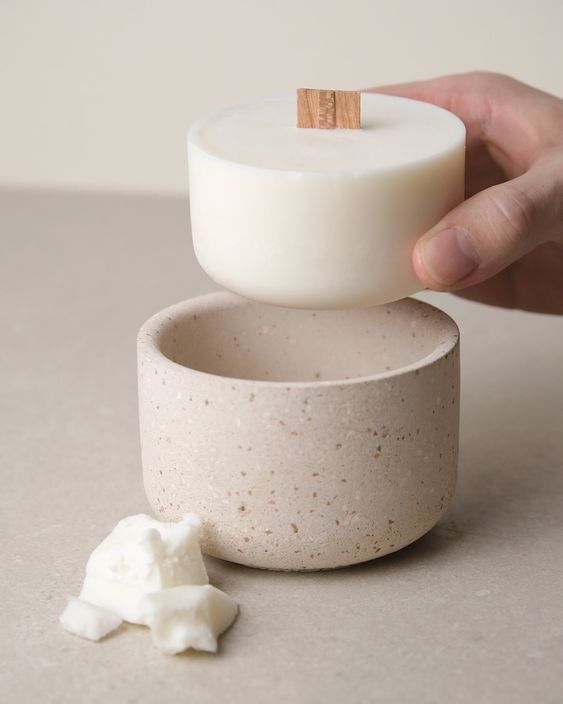
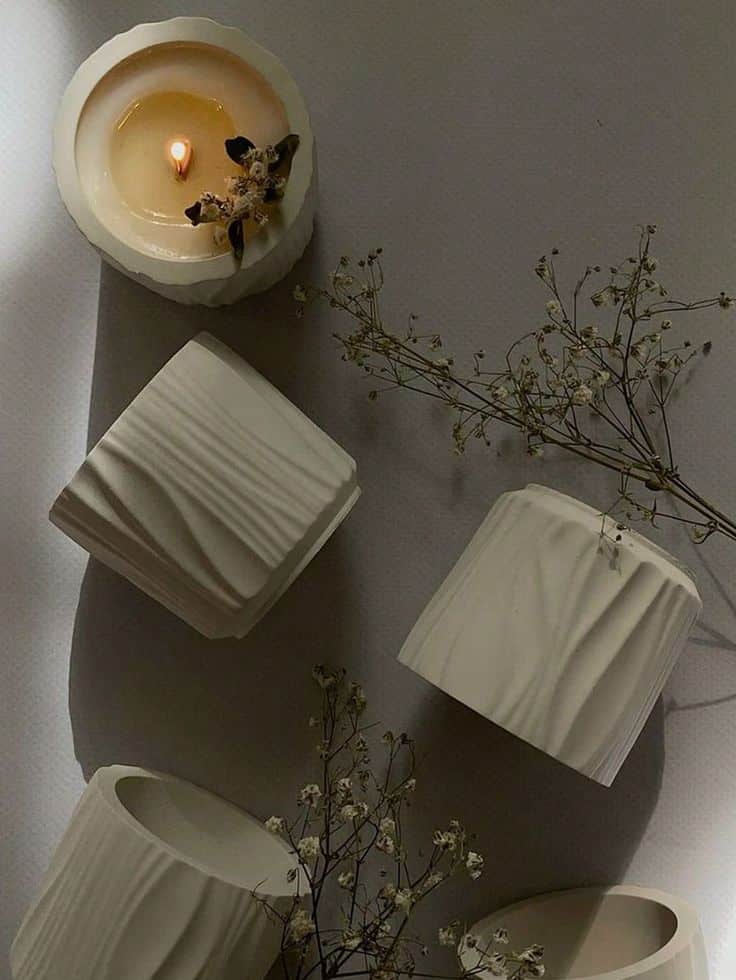
Containers provide form and protection to candles. Glass jars and metal tins are favored options as they safely contain melted wax. Heat-resistant glass is perfect for preventing breaks. Molds are utilized for shaped candles and come in various forms such as pillars, spheres, or unique designs.
Selecting the size of the container is vital; too large or too small influences the burning process of the candle. Ensure containers are spotless and dry prior to pouring in wax. Utilizing molds permits imaginative shapes but necessitates carefulness during candle extraction.
Step-by-step DIY candle creation guide
The candle creation process is gradual rather than challenging. Arrange everything before the wax melts, as once fragrance and temperature come into play, you wouldn’t want to be scrambling for a wick sticker or paper towel with one hand on a heated pitcher.
Set up your candle making workspace
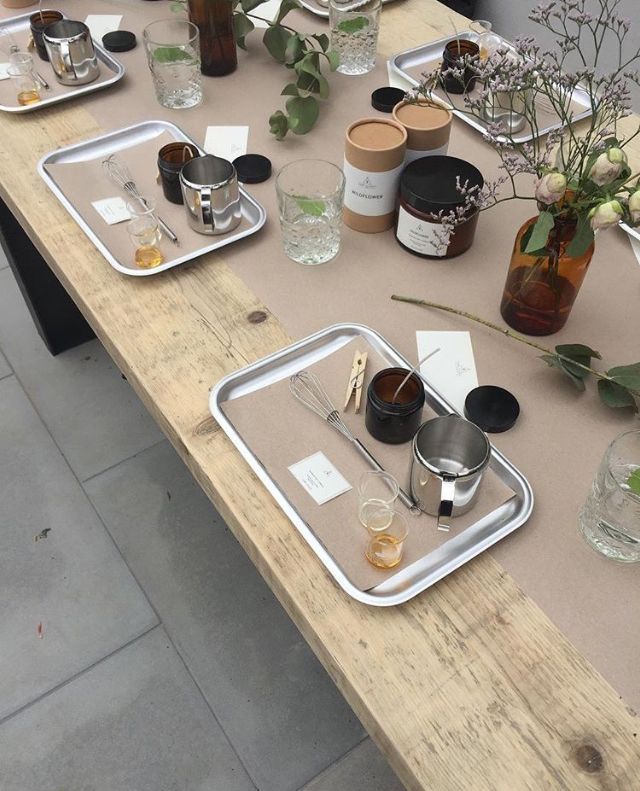
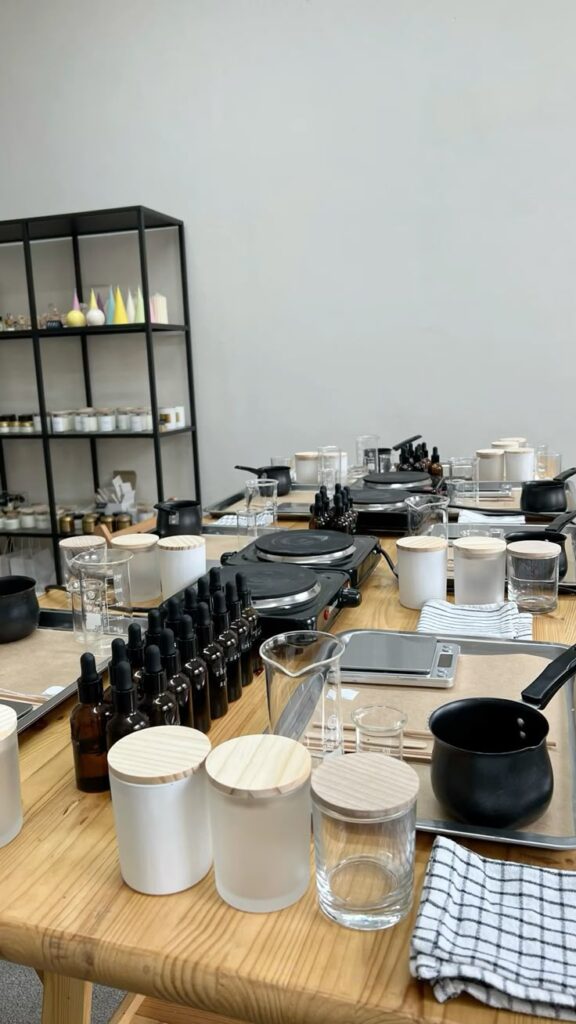
Before beginning, clear a level area and cover it with newspaper or a brown paper bag. This shields against wax spills. Ensure the space is well-ventilated to avoid inhaling fumes.
Collect all materials first: wax, wick, container, a double boiler, and any fragrances or dyes. Keep a thermometer close to monitor wax temperature.
Position a heat-resistant mat or tray below the candle container to capture drips. Have paper towels available for quick clean-ups. Wear old attire or an apron to prevent stains.
Melt and combine the wax
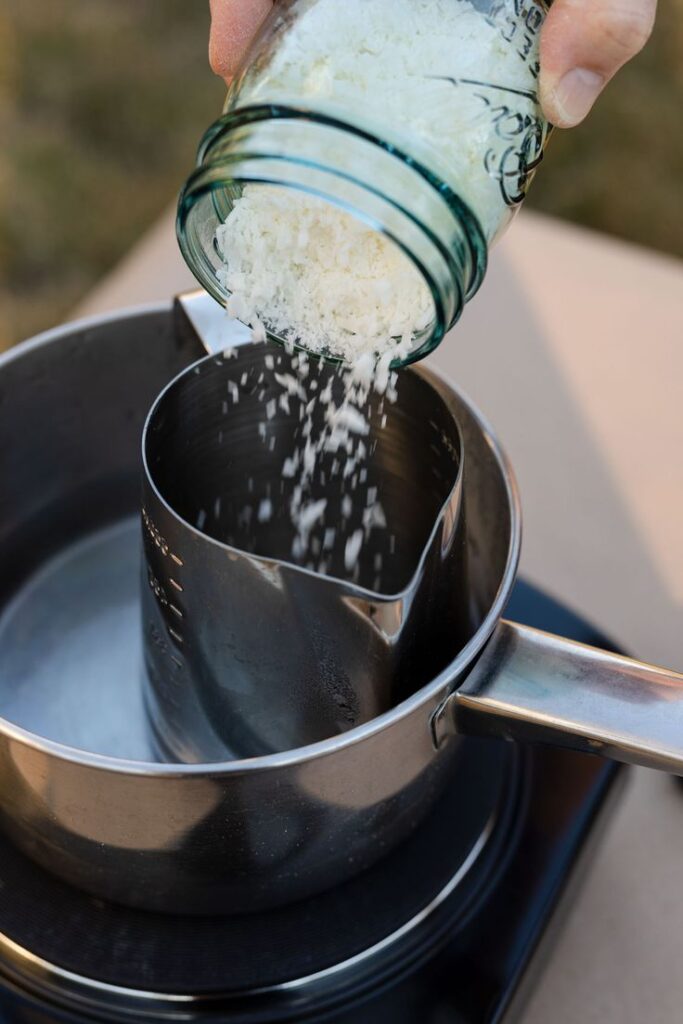
Employ a double boiler to gently melt the wax. This prevents burning. Heat the wax to the suggested temperature, typically around 170-180°F (77-82°C).
Once melted, take it off the heat and incorporate fragrance oils or color dyes. Stir gently for around 30 seconds for even mixing. Avoid rapid stirring, as this can create bubbles.
Recheck the wax temperature before pouring. The perfect pouring temperature varies by wax type but is often around 140-150°F (60-65°C). This ensures the candle sets evenly.
Pour the candle wax meticulously
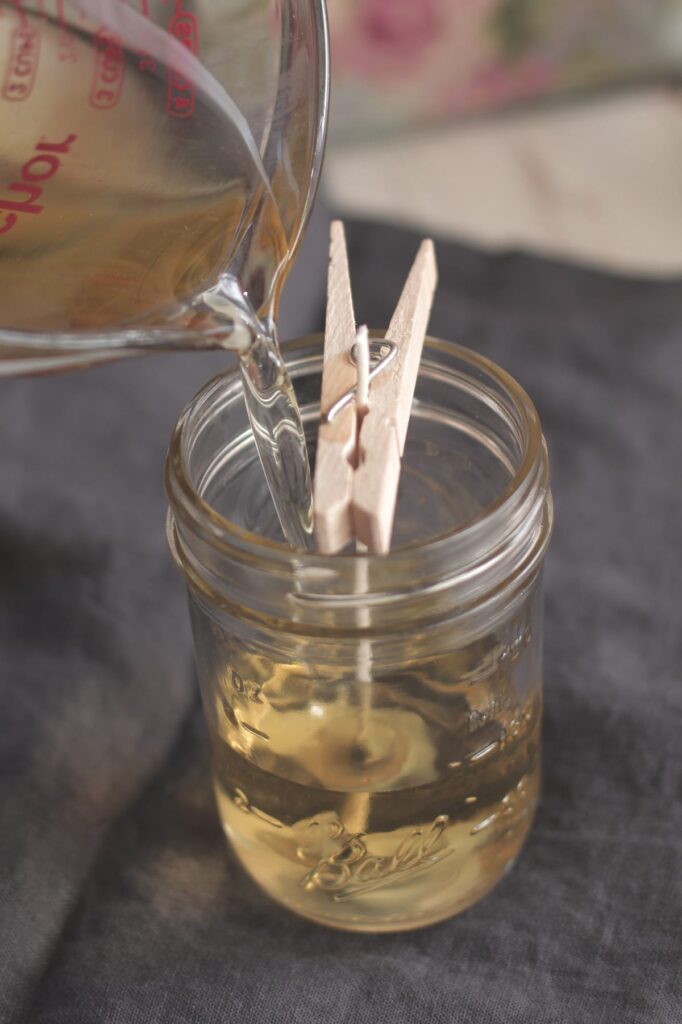
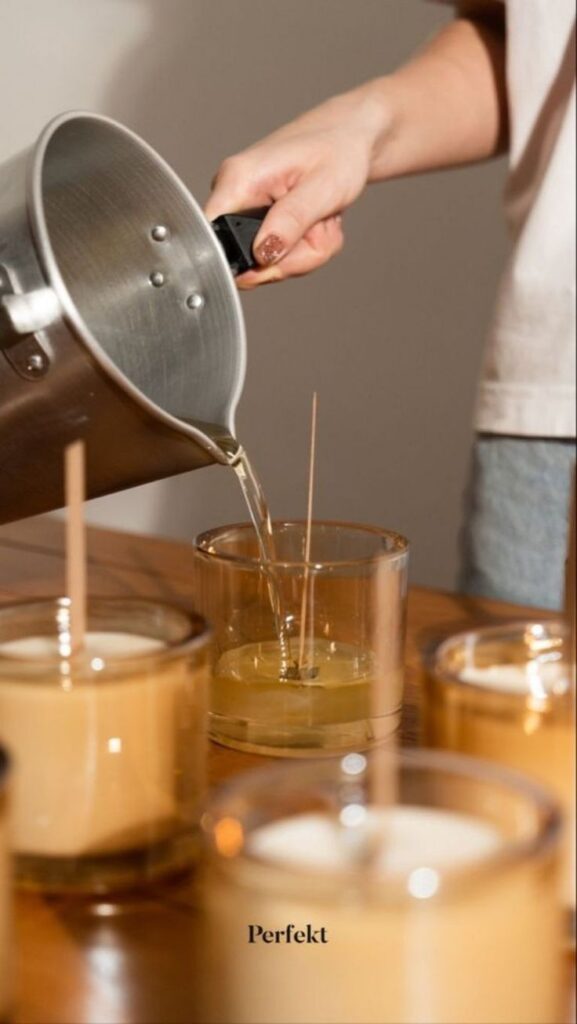
Pouring slowly and steadily aids in preventing air bubbles and uneven surfaces. Start by pouring a small quantity to cover the wick’s base, securing it in position.
Fill the container to roughly ½ inch from the top. Leave some space for the wax to expand while cooling.
Keep the container steady and attempt not to move it until the wax completely solidifies. If bubbles arise on the surface, gently pop them with a toothpick.
Let the candle cool at room temperature, away from drafts, for several hours before trimming the wick and using it.
Incorporating scent and color into homemade candles
Scent and color are where homemade candles begin to gain a personal touch, yet they can also spoil a batch if too much is added. Conduct small tests first. A subtle blend of lavender, vanilla, citrus, cedar, or clean linen often appears and burns better than a jar burdened with excess oil and dye.
Select candle-safe fragrance oils
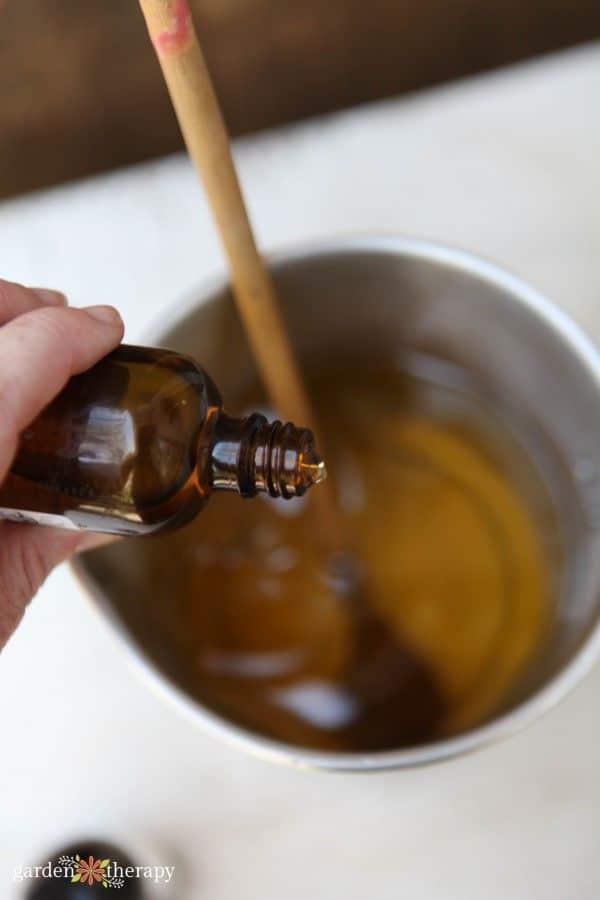
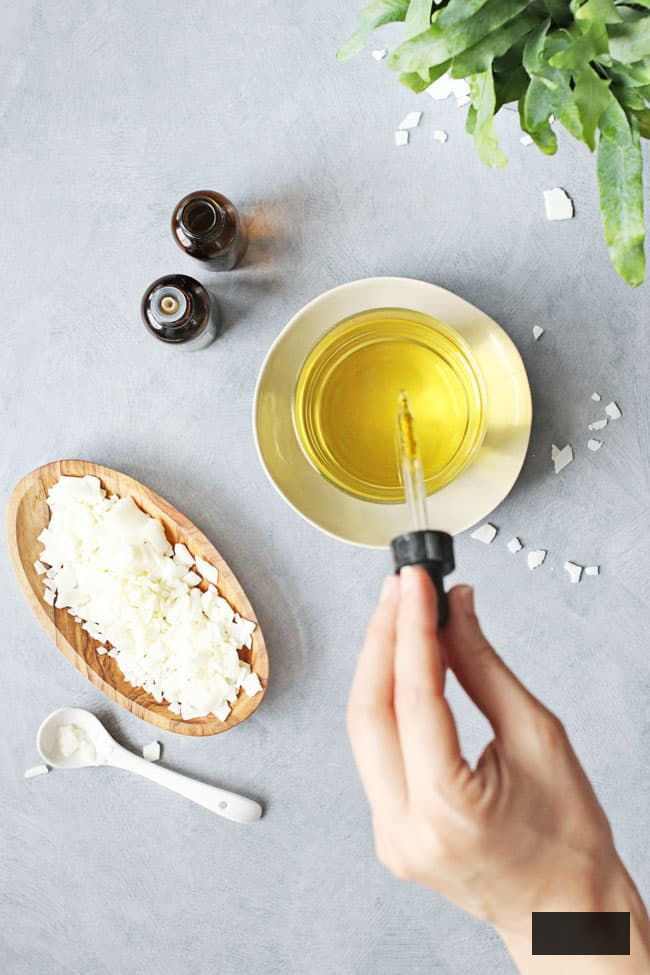
Aromatic oils are designed specifically for candle production and provide intense, enduring fragrances. It’s crucial to utilize oils crafted for candles, as certain scents may not blend well with heated wax.
When incorporating fragrance oils, the typical proportion is approximately 6-10% of the wax mass. Excess can influence how the candle burns. The optimal moment to introduce oils is when the wax cools to about 180°F (82°C) to preserve the fragrance’s potency.
Some favored fragrances include lavender, vanilla, and citrus. Experimenting with small quantities initially can help identify the perfect blend and intensity.
Utilize natural dyes with caution
Natural dyes can impart gentle, earthy hues to candles, but they aren’t necessarily safer when burning. Powders, petals, and botanical materials might obstruct the wick or leave traces in the wax. Employ very minimal amounts, assess the burn, and keep flammable decor away from the flame trajectory.
Common natural dyes comprise turmeric for yellow, beetroot powder for pink, and spirulina for green. The powders should be finely milled for uniform coloration.
To tint wax, incorporate the dye into the melted wax and mix thoroughly. Overuse can result in a grainy texture, so it’s advisable to commence with small quantities and modify as required.
Natural dyes might produce subtle shades instead of vivid ones, ideal for a warm, organic appearance.
Innovative candle decorating concepts
Embellishing candles can introduce flair and character to simple wax creations. Utilizing layered colors or organic elements like blossoms and foliage makes each candle distinctive and appealing.
Layer colored candle wax
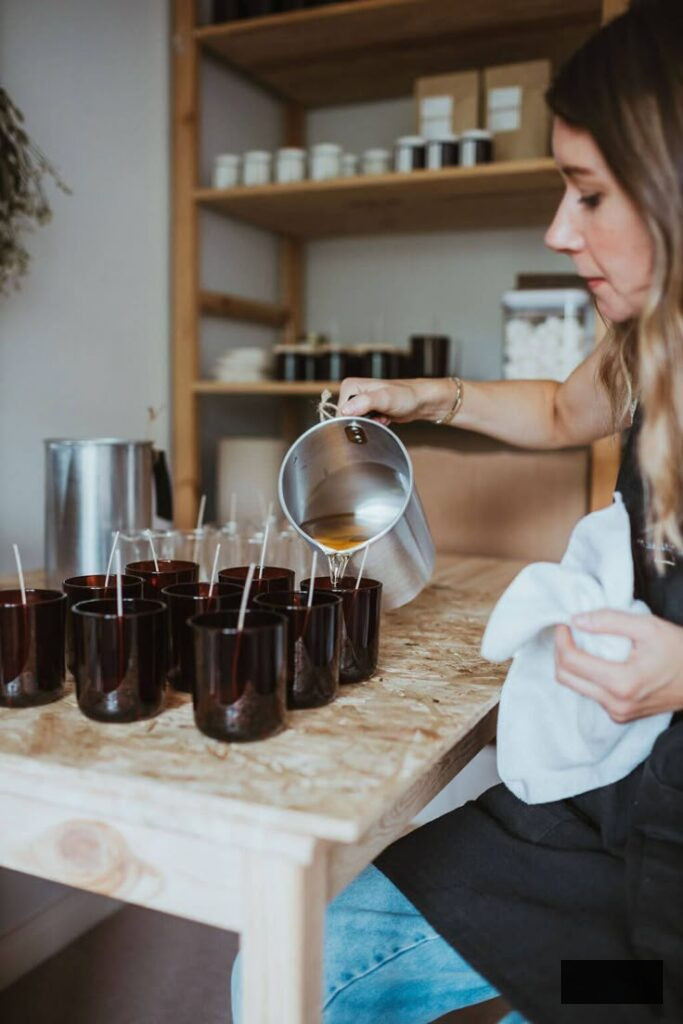
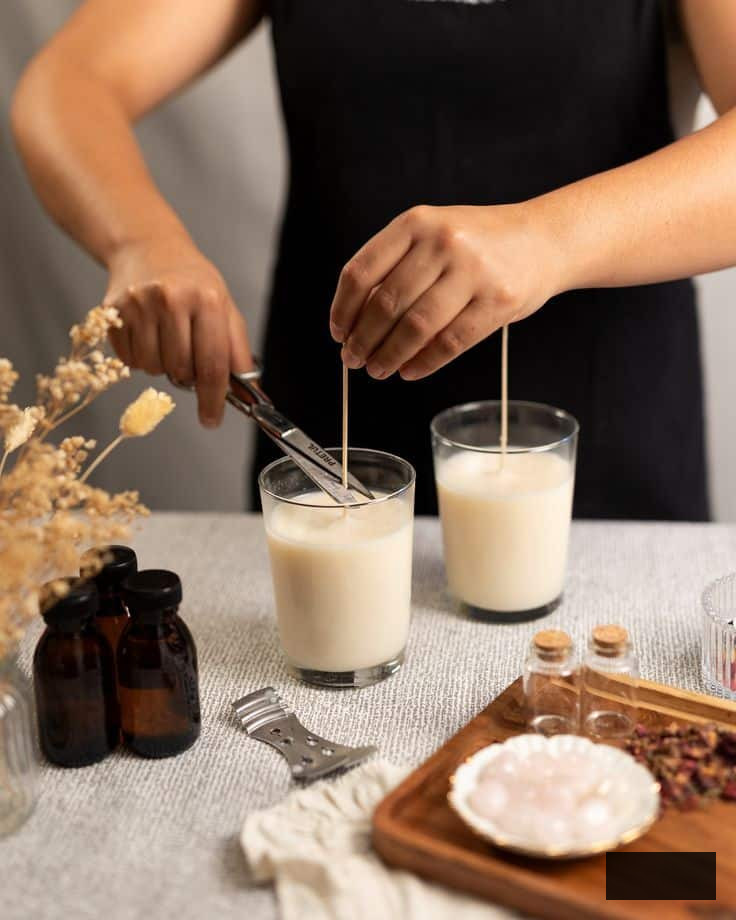
Layering entails pouring various colored wax in stages. Each layer ought to cool slightly before the next is added. This technique helps keep colors distinct and organized.
To experiment with layering, melt wax in small portions using different dyes. Pour the initial layer and wait until it is partially set yet still warm. Then gently pour the second colored wax on top. Repeat for additional layers.
Using contrasting hues or complementary shades can create either vibrant or delicate effects. Tilting the container slightly during pouring can also form angled color patterns.
Adorn candles with botanicals safely
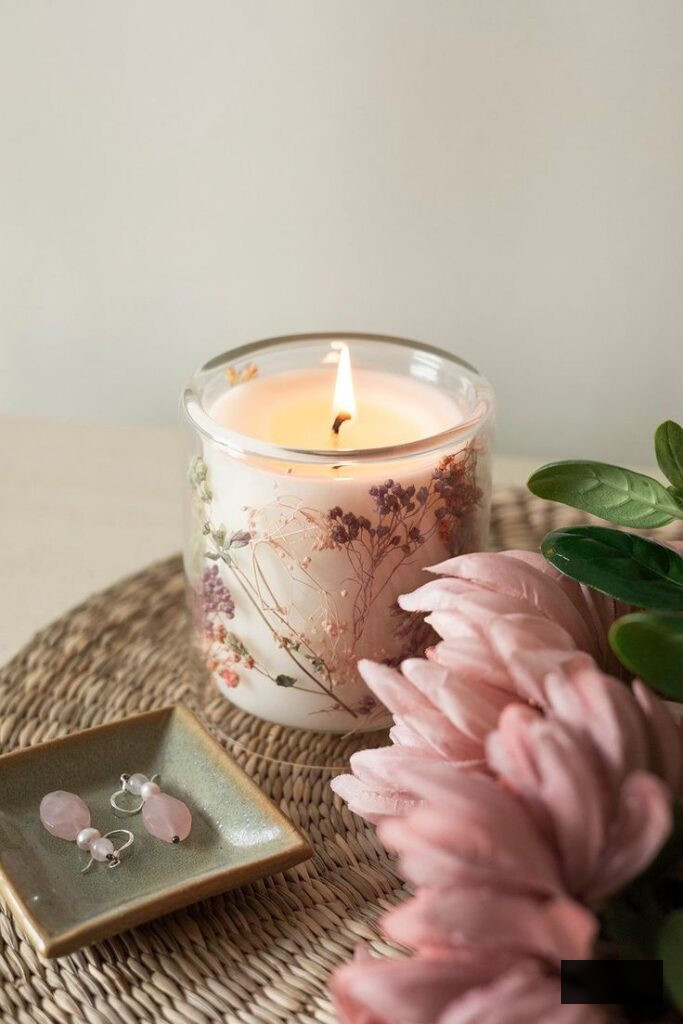
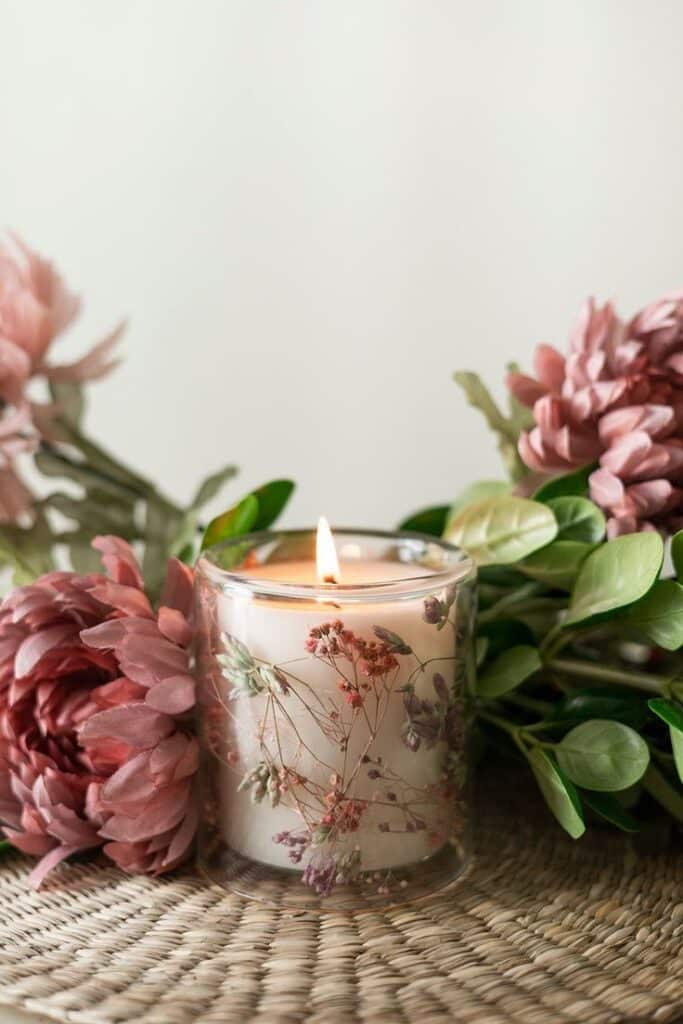
Incorporating dried botanicals into candles can augment their natural appeal. Blossoms, foliage, and herbs work wonderfully on the surface or can be gently pressed into the wax.
Prior to adding botanicals, ensure they are completely dry to prevent mold or fading. Attach them softly to the outer edge of the candle or embed them carefully when the wax is slightly pliable.
Common botanicals include rose petals, lavender buds, eucalyptus leaves, and small pine nuts. Utilizing clear wax or gel wax aids in keeping these details visible.
Simple enhancements such as binding twine or adding a petite dried flower bunch around the candle also contribute charm with minimal effort.
Candle crafting safety and troubleshooting
Safety is essential during candle creation and later when it is ignited. Hot wax can injure skin, fragrance oils require cautious handling, and a completed candle remains an open flame. For burning safety, general candle safety guidelines recommend trimming the wick, evading drafts, and ceasing use before the container becomes excessively hot.
Manage hot wax carefully
Let me know if you need any further modifications!
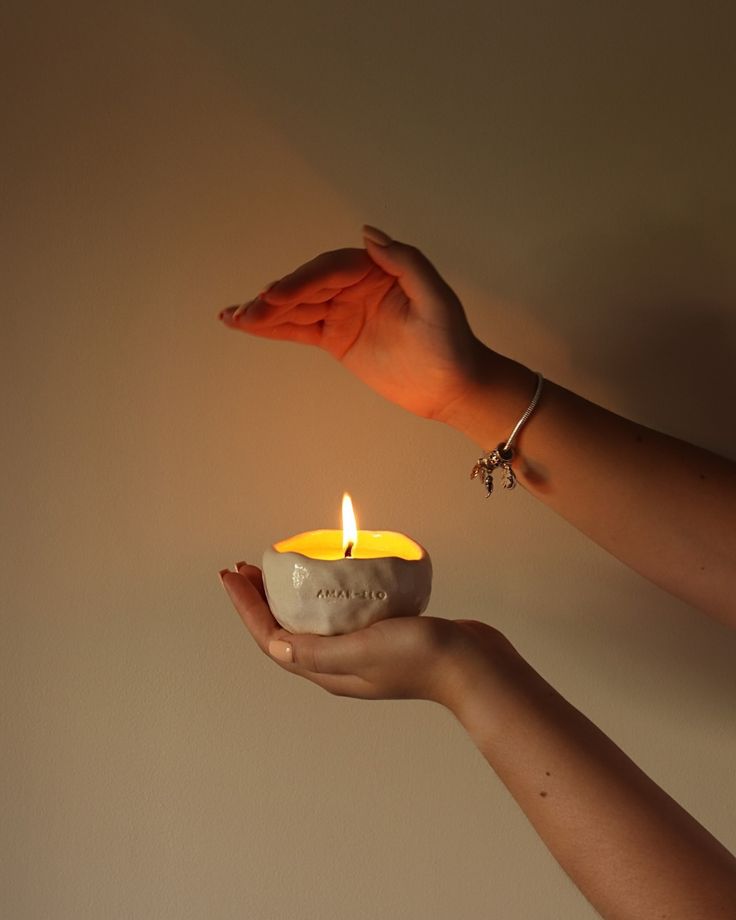
Hot wax has the potential to cause burns and spills if not managed appropriately. It should never be left unattended, even during double boiler usage.
In case wax spills on skin, promptly run the affected area under cold water to cool it and halt the burning sensation. Refrain from brushing off hot wax from skin, as this may exacerbate the burn.
Avoid wearing rubber gloves when dealing with hot wax due to the risk of melting. Instead, opt for heat-resistant gloves designed for kitchen tasks.
Maintain a tidy workspace devoid of clutter to prevent accidents. Always utilize tools specifically made for candle crafting and keep a fire extinguisher nearby as a safety measure.
Resolve common candle issues
Bubbles and tunnels within candles frequently arise from pouring wax too rapidly or at incorrect temperatures. Pour wax slowly and adhere to suggested melting points.
If a candle burns inconsistently or the wick shifts, it may be the wrong size or constructed from inferior materials. Utilize the appropriate wick type according to the diameter of the candle.
Soot production can be minimized by trimming the wick to roughly ¼ inch prior to each burn. Wicks that are too long can lead to smoking and uneven burning.
If candles are difficult to ignite, the wick may be too short or encased in solidified wax. Gently remove the excess wax or replace the wick for optimal flame performance.
For a complete handmade gift set, pair the candle with a small tray from these DIY clay projects, a simple home accent from these DIY home decor crafts, or a glossy coaster concept from the resin art guide.
DIY candle crafting FAQ
What is the simplest wax for DIY candle crafting?
Soy wax is frequently the simplest choice for novice candle crafting as it melts uniformly, cleans up with less hassle than some harder waxes, and is effective in jars. Paraffin is more affordable and produces a strong scent throw, while beeswax has a natural honey aroma but is pricier. For a first project, a soy container candle is the most forgiving option.
How much fragrance oil should I incorporate into candle wax?
Most beginner candles use approximately 6-10% fragrance oil based on wax weight, but the precise amount can vary depending on the wax and fragrance oil used. Excessive oil can weaken the burn, leak out of the wax, or create a harsh scent. Begin near the lower end, document the ratio, and adjust after creating a small test candle.
Can I create candles without a thermometer?
You can melt wax without a thermometer, although utilizing one makes the outcome much more reliable. Candle wax reacts to temperature: fragrance blends better within a specific range, while pouring too hot or cool can lead to sinkholes, frosting, bubbles, or poor surface finish. For beginners, a basic kitchen thermometer is worthwhile using.
Why did my homemade candle tunnel?
Tunneling typically occurs when the wick is undersized or the initial burn is too brief. The wax melts only around the wick, creating a hard ring near the container’s edge. Use a wick size that corresponds with the jar’s diameter, and allow the first burn to produce a full melt pool across the surface before extinguishing it.
How long should homemade candles mature before lighting?
Many handmade candles can be assessed after 24-48 hours, but soy candles often express a better scent after approximately one to two weeks of curing. Curing allows the wax and fragrance to merge properly. If you are crafting candles as gifts, pour them ahead of time, label the scent, and test one candle from the batch before distributing the rest.
Are dried flowers safe within candles?
Dried flowers are visually appealing, but they should not be placed close to the wick or flame. Loose botanicals can ignite if they float into the melt pool. For safer decoration, keep dried flowers outside of a container, use them on packaging, or embed them into decorative wax pieces that are not intended for burning.
What supplies do novices require to create candles at home?
Novices need wax, pre-tabbed wicks, heat-safe containers, a double boiler or pouring pitcher, a thermometer, fragrance oil formulated for candles, wick stickers or adhesive dots, and something to center the wick. Dye, labels, botanicals, and decorative jars are optional. Start with a small batch to keep mistakes economical.